
Should You Repair or Replace Your Lawn Mower?
The Honest Math
The fix costs less than about half of what a comparable new machine runs, and the engine and frame are sound.
The engine or transmission is gone on a machine that was cheap to begin with.
Most no-starts and rough-running problems are fuel-system fixes in the $140 to $250 range, on machines that cost $2,000 or more to replace.
Deciding whether to repair or replace a lawn mower comes down to three numbers: what the fix costs, what a new machine costs, and how much life your current one has left. Most services won't walk you through that math because it sometimes ends in "don't hire us." We will anyway. Here's how we think about it.
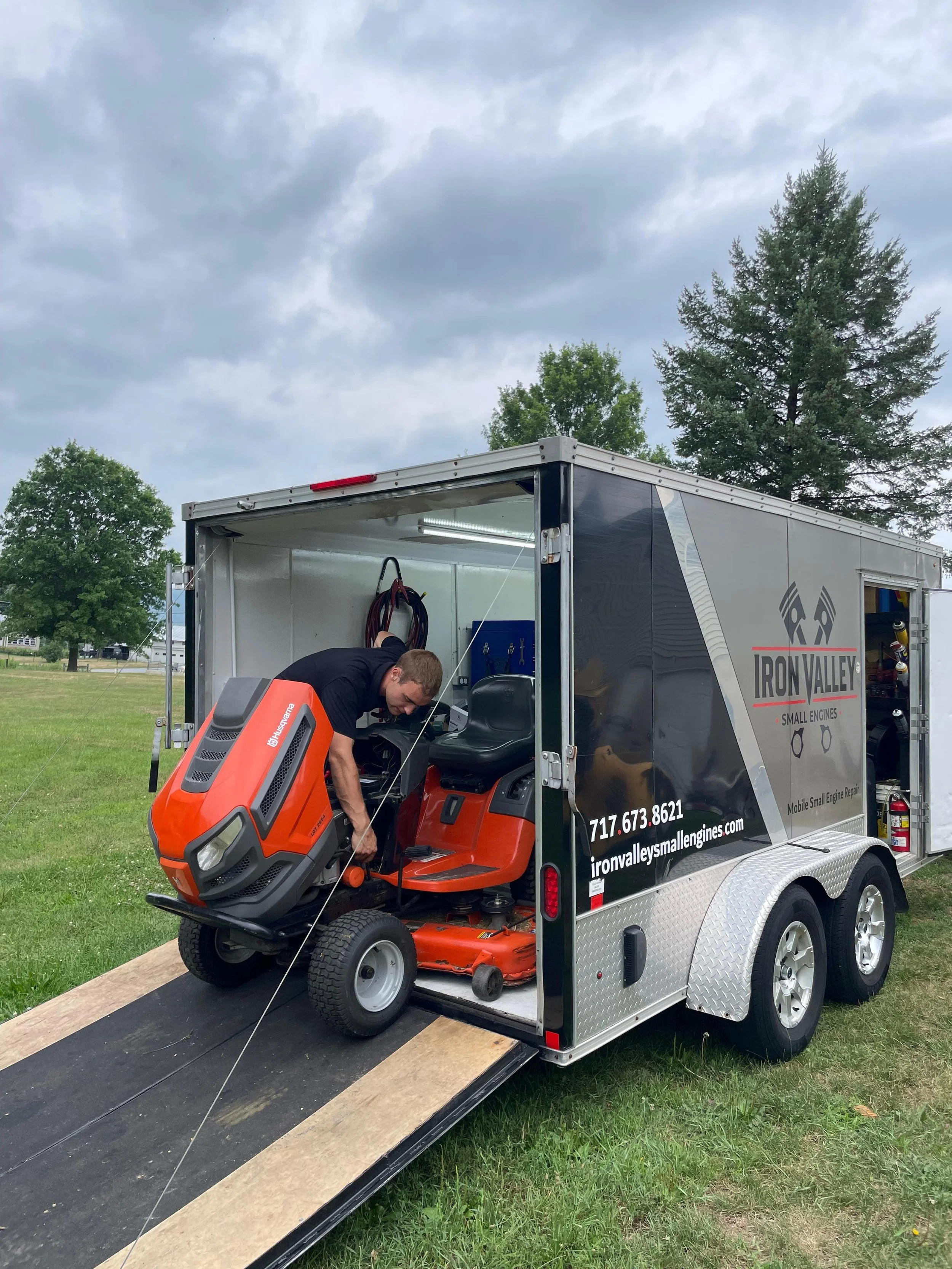
When is a lawn mower worth repairing?
A mower is worth repairing when the fix costs well under half the price of replacing it and the core of the machine (engine and frame) is healthy. By that test, most repairs on riding mowers are easy calls. A $200 fix on a $2,500 machine isn't a decision. It's maintenance.
The most common problems we see are fuel-system problems: old gas, gummed carburetors, clogged filters. (The carburetor is the part that mixes fuel and air for the engine. When it gums up, the engine can't run right.) These are 1-to-2-hour fixes, not machine-enders. The engine underneath is usually fine.
Age alone doesn't decide it either. A well-kept 8-year-old John Deere or Cub Cadet can have years of life left. A neglected 4-year-old machine might not.
The 50% rule, and how to adjust it
Repair cost as a share of replacement
Where common jobs actually land against the 50% line.
Not a decision. It's maintenance.
Still well under the line on any rider or zero-turn.
Right at the line. Condition and age break the tie.
Adjust for remaining life.
A repair that's 40% of replacement cost makes sense on a machine with most of its life ahead of it. The same repair on a machine that's already at the end of its expected hours is money down the drain.
Adjust for what "replacement" really means.
Replacing rarely means matching what you paid years ago. It means today's price for today's equivalent machine, plus the hassle of selling or scrapping the old one.
How long should a lawn mower last?
Longer than most people think. Gas riding mowers typically run 500 to 1,500 hours, which works out to roughly 6 to 10 years or more at normal home use, and push mower engines can go 10 years or beyond. Maintenance is what decides which end of that range you get.
Quality matters too. Equipment dealers estimate budget-line residential mowers at 450 to 500 hours, while better-built machines run 1,000 to 1,500 hours. If you own a solid brand like John Deere, Toro, Husqvarna, or Cub Cadet, the odds are good your machine has more hours left in it than you'd guess. That's usually an argument for repairing.
When is replacing the smarter call?
Replace when the expensive core of the machine fails on equipment that was inexpensive new. A seized engine or a cracked block on an aging push mower is the clearest case: a basic gas push mower runs $250 to $450 new, while engine replacement can run $260 to $1,800 installed. The math answers itself.
Points toward repair
- Fuel-system trouble: old gas, gummed carburetor, clogged filter
- Engine and frame are sound
- A well-kept machine from a solid brand
- A riding mower or zero-turn, where replacement is expensive
- A no-start. Almost never a dead mower.
Points toward replacement
- Seized engine or cracked block on an aging push mower
- Transmission failure on an older rider
- Repeated major repairs in back-to-back seasons
- Rust and frame damage that no part can fix
- A second big repair within a year of the first
“Lyndell came to my house and diagnosed my older John Deere riding mower. He gave me honest feedback about fixing the head gasket or buying a new one. We decided to have him fix it. He promptly showed up and did the work quickly. Text updates were sent to me along the way which was a huge help since I work from home and get pulled into meetings. Payment was also amazingly straight forward. Lyndell was extremely polite and professional. I will recommend to anyone I know that needs small engine service.”
Other signs pointing toward replacement: a transmission failure on an older rider, repeated major repairs in back-to-back seasons, or rust and frame damage that no part can fix. If the machine needs a second big repair within a year of the first, it's telling you something.
One thing that should never decide it: a no-start. A mower that won't start is almost never a dead mower. It's usually a $150 to $250 fuel-system fix wearing a scary costume.
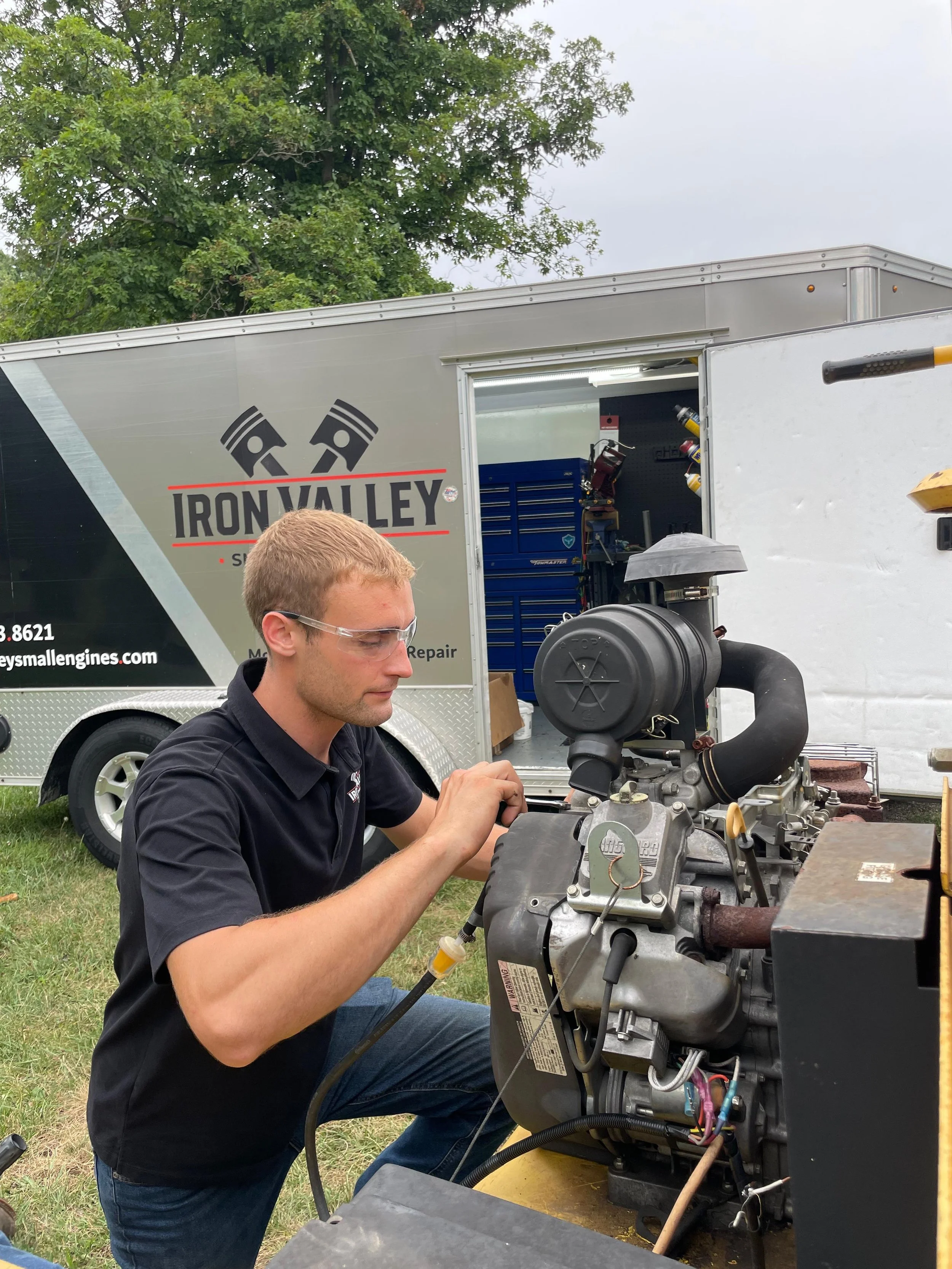
What's the math on a riding mower?
Riding mowers are usually worth repairing, because replacement is expensive. A mid-range lawn tractor averages around $2,531 new, with most models running $1,651 to $4,462. Against that, a $200 carburetor cleaning on a 6-year-old tractor is under 10% of replacement. Easy call.
Even a bigger job, say $400 to $500 in labor and parts, is still well under the 50% line on any riding mower or zero-turn. That's why riders almost always earn the repair, especially since a healthy one may have 500 or more hours of life remaining. The exception is the transmission-or-engine failure on a machine already past its expected hours. That one deserves the honest conversation.
Push mowers cut closer. A $150 repair on a $300 mower is right at the 50% line, so condition and age break the tie. We'll tell you which side yours lands on.
We'll tell you straight
Here's our promise: if your machine isn't worth the money, we'll say so at diagnosis, before the repair. That costs us a job now and then. We think it's why our reviews use words like "knowledgeable and honest." It's small engine repair, not rocket science, and there's no reason to pay for work a machine doesn't deserve.
What that looks like in practice: you call or text (717) 673-8621 and describe what the machine is doing. We come to you, diagnose it in your driveway, and give you the real answer. If it's worth fixing, we fix it on the spot 95% of the time. If it isn't, you're out the trip fee and diagnosis time instead of a repair bill that made no sense. Our pricing page shows exactly what the numbers look like.
Not sure which side yours lands on?
Tell us what the machine is doing and we'll give you a straight read before anyone touches a wrench. We come to you, in Lebanon, Berks, and northern Lancaster counties.
(717) 673-8621