
Lawn Mower Won't Start? Check These 5 Things
When a lawn mower won't start after sitting, the cause is usually old fuel. Gas older than about 30 days breaks down and gums up the carburetor. Check five things first:
If fresh gas and a new plug don't fix it, the carburetor needs cleaning, and that's a job we do right in your driveway.
It's the first warm Saturday of spring. The grass is ready, you pull the cord, and nothing. If your lawn mower won't start, don't panic and don't buy a new one. The fix is usually simple, and often you can handle it yourself in the next twenty minutes. Here's exactly what to check, in order.
What is the machine actually doing?
Three symptoms cover most no-starts we see.
Usually old fuel. Start with the five checks below. Gas from last season is the first suspect.
Classic gummed carburetor. Same if it only runs on choke or surges instead of idling smooth. Fresh gas alone won't fix this one.
Electrical, not the engine. Weak battery, corroded cables, or a failing starter solenoid.
Why won't my lawn mower start after sitting all winter?
Old gas is the usual culprit. Briggs & Stratton says stale fuel, dirt, and debris are the most common causes of outdoor equipment that won't start or run right. Gasoline more than 30 days old breaks down and stops igniting the way the engine needs.
Here's what happens over the winter. The gas left in the tank slowly turns gummy, like varnish. That residue thickens inside the carburetor and clogs the tiny fuel passages the engine drinks through. (The carburetor is the part that mixes fuel and air. Its passages are small enough that a little gum shuts them down.) Come spring, the engine cranks but can't get fuel, or gets just enough to sputter.
This is true for every brand we service: Toro, John Deere, Cub Cadet, Husqvarna, Craftsman, Troy-Bilt, and the Briggs & Stratton and Kohler engines inside most of them.
Check these 5 things before you call anyone
Before touching the blade or tipping the mower, pull the rubber cap off the spark plug (the thick wire on the front or side of the engine). That makes an accidental start impossible.
The gas
If the fuel is from last season, it's suspect. Drain it (a cheap siphon works), refill with fresh gas from a busy station, and try again. Toro's own advice starts with fuel less than 30 days old.
The spark plug
Check that the plug wire is actually pushed on snug. Then unscrew the plug with a socket wrench and look at the tip. Black, crusty, or wet means trouble. Clean it with a wire brush or replace it. A new plug costs less than lunch.
The air filter
Engines need air like they need fuel. Pop the filter cover (usually one screw or a snap tab) and look. If the filter is caked with dust and clippings, clean the foam type with soapy water and dry it, or replace the paper type.
The safety controls
Mowers refuse to start on purpose more often than you'd think. Hold the bail lever (the bar at the handle) fully against the grip. On riders: sit fully on the seat, set the parking brake, and make sure the blades are disengaged. Any one of those switches will silently block the start.
The battery (riding mowers)
If you turn the key and get nothing or a weak groan, charge the battery and check that the terminals are tight and free of white or green crust. Batteries hate sitting all winter.
What does it mean if the mower starts, then dies?
A mower that fires up and then dies within seconds is the classic sign of a gummed carburetor. There's enough fuel getting through to catch, but not enough to keep running. The same goes for a mower that only runs on choke, or surges up and down instead of idling smooth.
Fresh gas alone usually can't fix this one, because the varnish is already inside the carburetor's passages. The carburetor needs to come apart and get cleaned. That's the line where most homeowners reasonably stop: the parts are small, the settings are fussy, and one lost spring turns a Saturday project into a week of waiting on parts.
Why does my riding mower click but not turn over?
A single click (or rapid clicking) when you turn the key almost always points to the electrical side: a weak battery, corroded cables, or a failing starter solenoid. (The solenoid is the small relay that sends battery power to the starter motor.) It's rarely the engine itself.
Charge the battery fully and clean the cable connections first. If it still just clicks, the solenoid or starter needs testing, and that's a driveway diagnosis for us. Whatever you do, don't keep cranking a click. You'll cook the good parts trying to wake the bad one.
Stop when fresh gas, a good spark plug, and a clean air filter haven't fixed it. At that point the problem is almost always inside the carburetor or the fuel line, and the fix needs teardown, cleaning, and correct reassembly. There's no shame in that line. It's where we start.
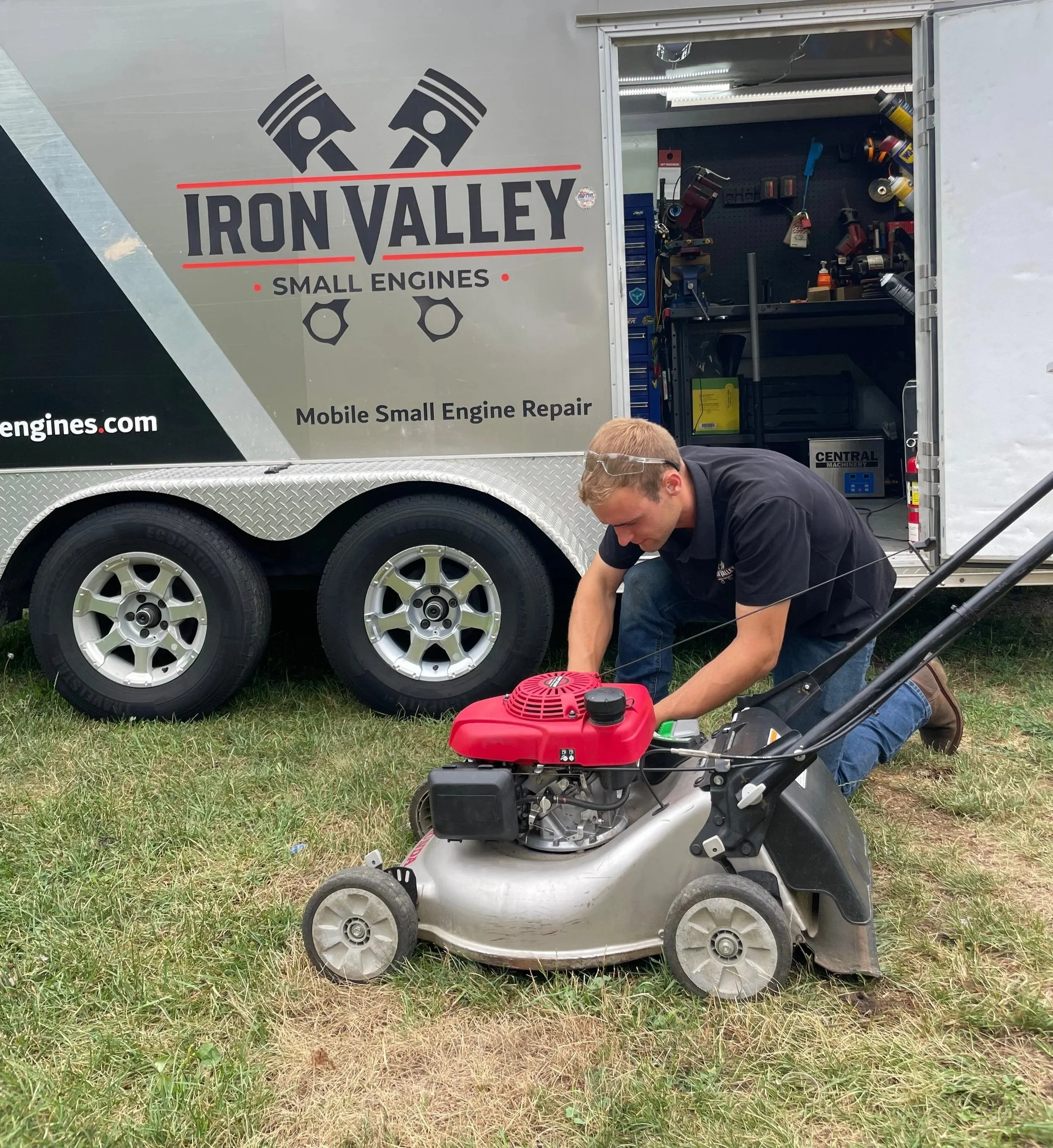
Here's the part that matters: you don't haul the mower anywhere. We come to you anywhere in Lebanon, Berks, and northern Lancaster counties, and we fix 95% of machines right in the driveway, usually in 1 to 2 hours. A no-start is one of the least expensive repairs we do. Our pricing page shows the exact numbers, and if the machine genuinely isn't worth fixing, we'll tell you that too. You don't even need to be home for the visit.
When should you stop wrenching and call someone?
The 30-second habit that prevents most of this
Buy gas in small amounts and use it within a month. If fuel is going to sit, add fuel stabilizer so it doesn't break down. And before winter, either run the tank dry or stabilize a full one.
That's it. That one habit prevents most of the no-starts we see every spring. If you'd rather have it handled for you, our Winter Service Plan gets your equipment serviced before the season at 10% off standard rates, so it starts on the first pull when the grass does.
The bottom line
A lawn mower that won't start is usually announcing old gas, not a dead engine. Run the five checks. If it starts, you're done. If it doesn't, call or text us or schedule your service, and we'll bring the repair to your driveway. Push mower or zero-turn, it never has to leave your yard.
(717) 673-8621